
Africa cannot add value to resources it lacks the skills to process. The African Union’s Africa Mining Vision notes that most of Africa’s minerals are exported “as ores, concentrates or metals, without significant value-addition”. It calls on governments to nurture “human resources development and skills formation”. Processing, refining, financing and regulating mineral wealth all need trained people. Without them, value is created elsewhere.
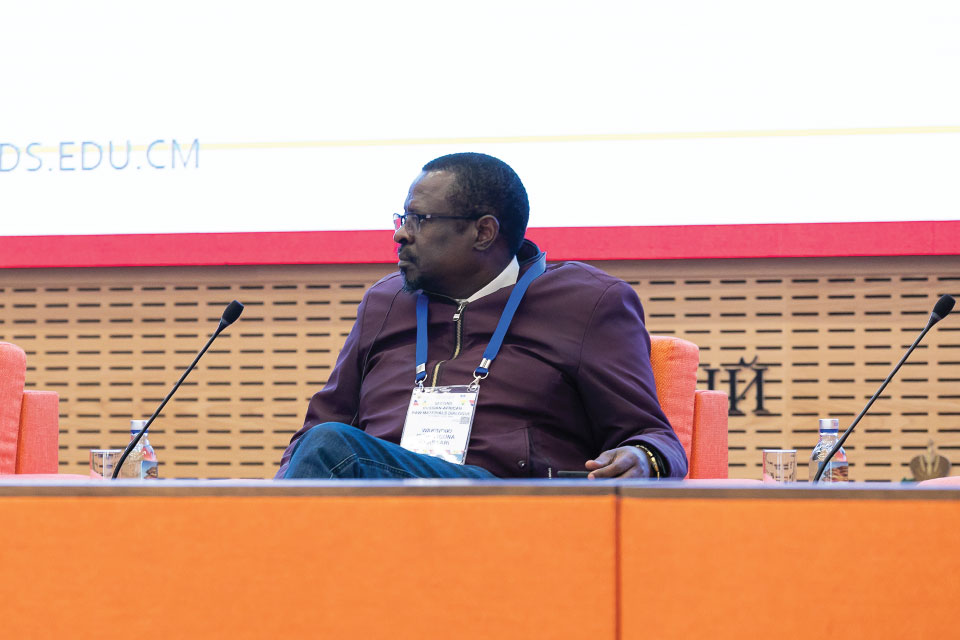
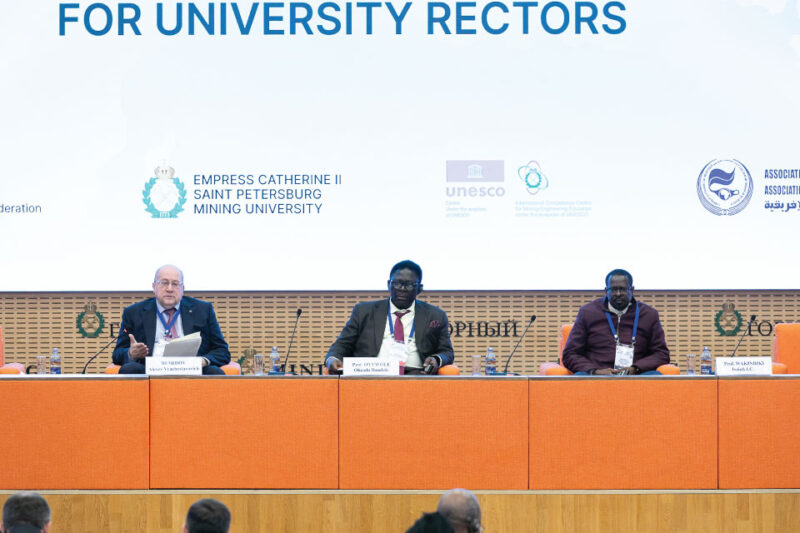
This was the message Prof. Isaiah I.C. Wakindiki, PhD, EBS carried to the 2nd Russia–Africa Raw Materials Dialogue in St. Petersburg, held from 12 to 15 October 2026.
As part of the Association of African Universities (AAU) delegation, Prof. Wakindiki joined the Academic Session for Rectors, which focused on how engineers should be trained for the minerals sector. Participants agreed on the need to harmonise educational standards, develop a common core for engineering curricula, and make qualifications comparable so that students and staff can move between African universities.

Presenting Kenya’s experience, Prof. Wakindiki pointed to a gap many African countries share. According to the Engineers Board of Kenya, the country has more than 37,000 trained engineers, but only about 4,500 are licensed professional engineers. Additionally, only two Kenyan universities offer a recognised degree in mining and mineral engineering. “The future of engineering education is not only more graduates, but it is also more licensed problem-solvers,” he told the session.
Africa’s plan for prosperity will not be achieved in boardrooms alone. It will be built in lecture halls, laboratories and workshops. The African Union’s Agenda 2063, a 50-year blueprint running from 2013 to 2063, depends on Africa training the people who can turn its resources into wealth. Higher education supplies the skills, research and leadership that Agenda 2063 assumes. The second goal calls for “well-educated citizens and skills revolution underpinned by science, technology and innovation”. Universities are where that revolution takes shape: they train engineers and economists, produce research that informs policy, and prepare leaders who manage public resources.
Higher education’s role in Agenda 2063 is to deliver its skills revolution by training the people, producing the research and preparing the leaders Africa needs. Nowhere is this clearer than in the minerals sector, where the Africa Mining Vision treats local value addition and skills formation as two sides of the same promise. No university can meet this challenge alone. Through the Association of African Universities, Africa’s universities can set shared standards, shape partnerships around African priorities and speak with one voice. Prof. Wakindiki carried that message to St. Petersburg as AAU Vice President.
KCA University is ready to play its part through applied research, professional and executive training, and faculty and student exchange. Agenda 2063 is Africa’s promise to itself. Its foundations will be laid by the students learning in our classrooms and laboratories today.