0

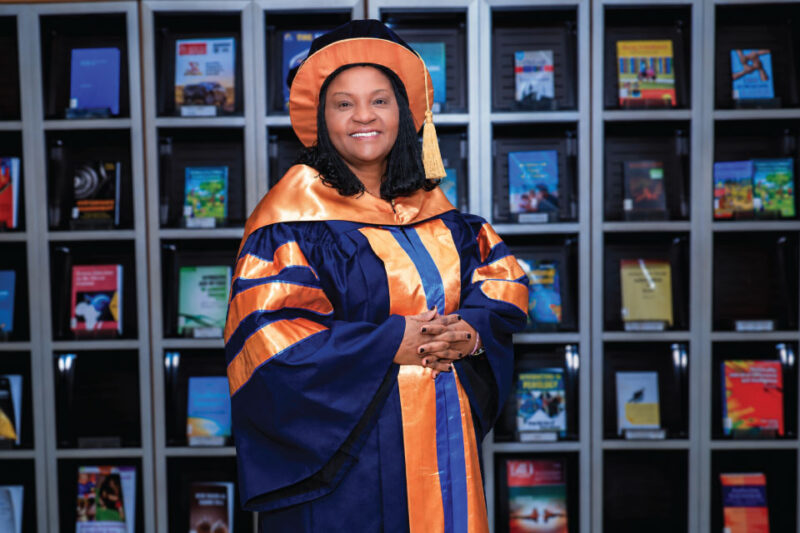
Meet Prof. Kisilu, the Professor of Education Rethinking How Universities Deliver Competencies

From curriculum and pedagogy to educational technology and competency-based education, Prof. Anne Syomwene Kisilu has spent more than 17 years teaching and researching how universities can better prepare graduates for a dynamic world.

She is Dean of the School of Education, Arts & Social Sciences and Professor of Education (Curriculum, Educational Media & Technology) at KCA University. Ahead of her inaugural lecture on 23 September 2026, we asked her what drew her to education, what today’s graduate needs beyond a degree, and the question at the heart of her lecture.

You have spent more than 17 years in university teaching and research. What first drew you to education?

Education has always fascinated me because of its power to shape individuals and ultimately, society. My interest in education, particularly curriculum studies, grew from an appreciation of the role curriculum plays in determining what learners experience, the knowledge they acquire and the competencies they develop.

Over the years, this interest has expanded to include pedagogy, educational media and technology. I have become increasingly interested in how these areas can work together to make teaching and learning more relevant and responsive to the changing needs of society.

Your work spans curriculum, pedagogy, educational media and technology. What connects these areas for you?

These areas are closely connected by one central question: how do we make education meaningful and relevant to the learner and the world they will enter?

A curriculum may identify what learners need to develop, while pedagogy determines how that learning takes place. Educational media and technology can further enhance the process by creating new ways of accessing, engaging with and applying knowledge. Bringing these areas together allows us to think more holistically about the learning experience.

You have now taken on the role of Dean of the School of Education, Arts & Social Sciences. What does this responsibility mean to you?

It is an opportunity to contribute to the continued growth of the School while supporting an environment where teaching, research and innovation can thrive.

I see academic leadership as a collective responsibility. It is about working with faculty, students and other stakeholders to strengthen academic excellence, encourage research and ensure that the School keeps pace with developments in education and society.

What do you think today’s university graduate needs beyond a degree?

A degree provides an important foundation, but today’s graduate needs more than academic knowledge. They need the ability to apply what they know, think critically, solve problems, communicate effectively, collaborate with others and adapt to change.

The world of work and society is evolving rapidly. Universities therefore need to prepare graduates who are not only knowledgeable but also equipped with the skills, attitudes, values and capabilities required to navigate that environment.

What is your inaugural lecture about?

More than 160 years ago, the philosopher Herbert Spencer asked, “What knowledge is of most worth?” That question has shaped curriculum thinking for generations. Today, I believe it needs to be expanded: what knowledge, skills, attitudes and values (in other words, what competencies) are of most worth for graduates to thrive in the twenty-first-century workplace and society?

In the lecture, I argue that answering this requires universities to move beyond knowledge transmission towards competency development. I propose the Competency Transformation Model as a framework for redesigning curriculum and instruction to achieve that. It is a timely conversation, given Kenya’s ongoing reforms towards Competency-Based Education.

Technology is transforming education. What excites you most about its role in teaching and learning?

Technology has opened up opportunities to rethink how knowledge is accessed, shared and experienced. It can support more flexible approaches to learning and provide educators with new ways of engaging students.

However, technology should serve pedagogy rather than replace it. The important question is not simply whether we are using technology, but whether we are using it meaningfully to improve learning and develop the competencies students need.

With Artificial Intelligence becoming increasingly influential, what should universities be doing differently?

AI presents both opportunities and challenges for higher education. Universities need to prepare students to engage with emerging technologies critically, ethically and responsibly.

At the same time, we need to strengthen the human capabilities that technology cannot simply replace: critical thinking, creativity, ethical judgement, communication and the ability to work with others. The university of the future will need to balance technological advancement with these essential human competencies.

You have supervised more than 20 doctoral and 40 master’s students. What has that experience taught you about mentorship?

Postgraduate supervision is about more than guiding a student through a research project. It is about helping develop an independent thinker and researcher.

It requires patience, critical engagement and academic rigour, but it is also rewarding to see students grow in confidence and contribute new knowledge to their fields. As supervisors, we guide, but we also learn from the perspectives and questions that students bring to their research.

You have published more than 60 articles, alongside books and book chapters. What makes research meaningful to you?

Research is meaningful when it contributes to knowledge and, where possible, informs practice, policy or decision-making. As academics, we have a responsibility to move beyond simply producing publications and ask how our scholarship can contribute to addressing real challenges.

In education particularly, research should help us question existing approaches, generate evidence and find better ways of supporting teaching and learning.

What do you think Kenya’s education system needs to get right for the next generation?

We need to continue building an education system that develops relevant competencies while maintaining strong academic foundations. Curriculum reform should be accompanied by appropriate pedagogical approaches, well-prepared educators and the resources necessary to support effective implementation.

We also need to remain responsive to technological change and the evolving needs of society and the workplace.

What is one thing you hope students and colleagues will always associate with your leadership?

I would like my leadership to be associated with academic excellence, collaboration, innovation and a genuine commitment to educational transformation. Ultimately, I would like to contribute to creating an environment where both students and faculty have the opportunity to learn, grow and make a meaningful impact.

Related Posts